La Junta destina 15,4 millones hasta 2026 para restaurar casi 5.000 hectáreas de humedales
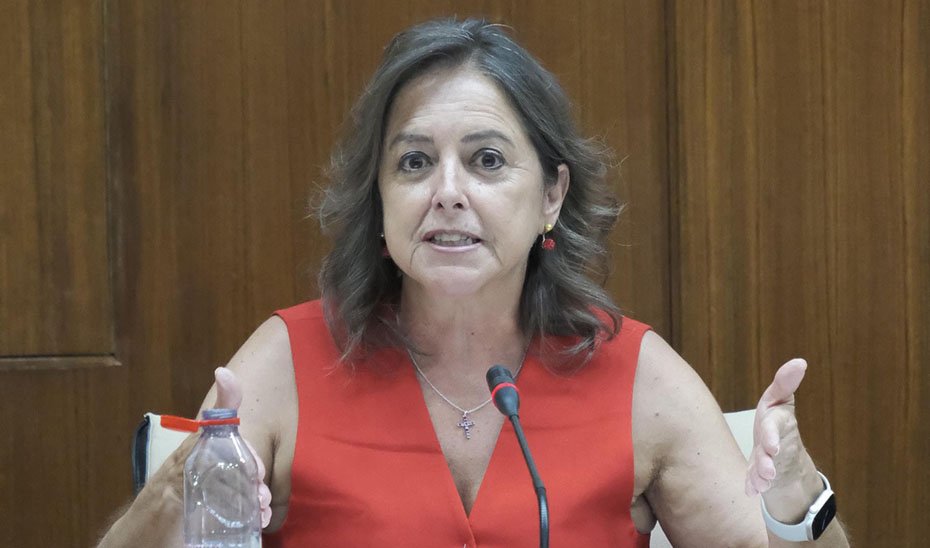
The Minister of Sustainability and Environment of the Andalusian Government, Catalina García, appeared before the parliamentary committee to report on the restoration of wetlands in the autonomous community. In this regard, she emphasized that the Andalusian Administration has allocated over 15.4 million between 2023 and 2026 for the restoration of 4,933 hectares of wetlands, within the framework of the Restoration Transformation and Resilience Plan (PRTR), as part of the NextGenerationEU Funds.
She highlighted actions such as the restoration of inland endorheic lagoons, including the Southern Lagoons of Córdoba, with an investment of 2.3 million euros; the Hituelo and Grande de Baeza Lagoons in the province of Jaén, valued at 700,000 euros, or the restoration of various Lagoons in the province of Málaga, totaling 909,645 euros, among others. Regarding the recovery of intertidal zones and marshes, she emphasized the restoration of the East Arm in Seville, with over 810,000 euros; the Cetina Marshes in Cádiz, with a total investment of 495,614 euros, or the restoration of several wetlands in the province of Huelva, with a budget allocation of over 520,000 euros, among other initiatives. She also mentioned the restoration of saline areas, such as the Cabo de Gata Salt Flats, for 1,400,405 euros and the Carboneros Salt Farm in the Bay of Cádiz Natural Park, for 698,755 euros.
During her speech, the minister recalled that Andalusia is home to around 17% of the wetlands in the Spanish territory, representing 56% of the country’s floodable area. «This wealth is not only quantitative but also ecological, cultural, and symbolic. In our estuaries, a large part of the marine species we consume daily reproduce, and our marshes harbor invaluable biodiversity,» she said. She explained that wetlands play essential roles such as regulating the water cycle, controlling floods, preserving biodiversity, and mitigating the effects of climate change. «They are also fundamental habitats for unique species and serve as life reservoirs, as well as indicators of the territory’s health,» she emphasized.
In this context, she highlighted the Andalusian Wetlands Inventory, which already includes 229 wetlands covering an area of over 143,600 hectares. The latest addition has been the Haza de la Torre wetland in Cádiz. Internationally, she mentioned the 25 wetlands included in the Ramsar list, whose informational sheets are being updated by the Junta in collaboration with the Ministry for Ecological Transition and the Demographic Challenge. «The fact sheets for the Southern Lagoons of Córdoba and Tíscar have already been updated, reinforcing our commitment to international conservation agreements,» she stated.
She also emphasized the role of the Andalusian Wetlands Committee as a technical, scientific, and participatory coordination body that ensures compliance with the Andalusian Wetlands Plan, proposes conservation actions, promotes territorial stewardship, and issues reports for proper management. «It is a key tool for continuing to advance in effective and shared governance,» she pointed out.
Regarding planning, she informed that the Junta has initiated the revision of the Andalusian Wetlands Plan, in force since 2002, after evaluating its implementation between 2002 and 2023. This revision will culminate in the new Andalusian Wetlands Plan Horizon 2030, aligned with state and European strategies. «Its aim will be to consolidate habitat and species recovery, preserve ecosystem services, and strengthen the environmental, economic, and social value of these spaces,» she affirmed.
As part of the comprehensive ecological restoration strategy, the minister highlighted the acquisition of several wetlands, such as the Conde Lagoon or Salobral in Córdoba, as well as other sites in the provinces of Málaga and Granada. These acquisitions will enable the implementation of previously planned recovery actions.
Hydrodynamic Improvements in the Doñana Natural Space
In particular, she emphasized the Junta’s acquisition of the Veta la Palma and Tierras Bajas estates, which contribute over 8,700 new hectares of high environmental value to the public management of the Doñana Natural Space. The total investment amounted to 78.5 million euros, coming from own and European funds. «These estates are integrated into an emblematic space and will allow for the implementation of hydrodynamic improvements, revegetation, naturalization of slopes, and studies on their ecological functioning,» she explained.
Catalina García also highlighted Andalusia’s participation in the LifeWetlands Project. In Andalusia, the actions will focus on the Southern Lagoons of Córdoba and Fuente de Piedra Lagoon in Málaga.
On the European level, she noted that the new Nature Restoration Regulation, approved in June, establishes the obligation to restore 20% of terrestrial and marine ecosystems in the European Union by 2030. Among the specific objectives for wetlands is the improvement of 30% of these ecosystems by that date, 60% by 2040, and 90% by 2050, with priority given to the Natura 2000 spaces. «This regulation represents a paradigm shift, conceiving restoration as an investment for human well-being, food security, and the fight against climate change,» she stated.
The minister emphasized that all these measures are part of an integrated strategy that includes ecologically adapted restoration for each type of wetland, the acquisition of key lands, participation in major national and European projects, improvement of public infrastructure, and promotion of ecotourism and environmental education. «Institutional collaboration, especially in Doñana, has also been essential for consolidating these policies,» she concluded.