La Formación Profesional Pública se consolida en Andalucía con más de 85.000 convenios firmados
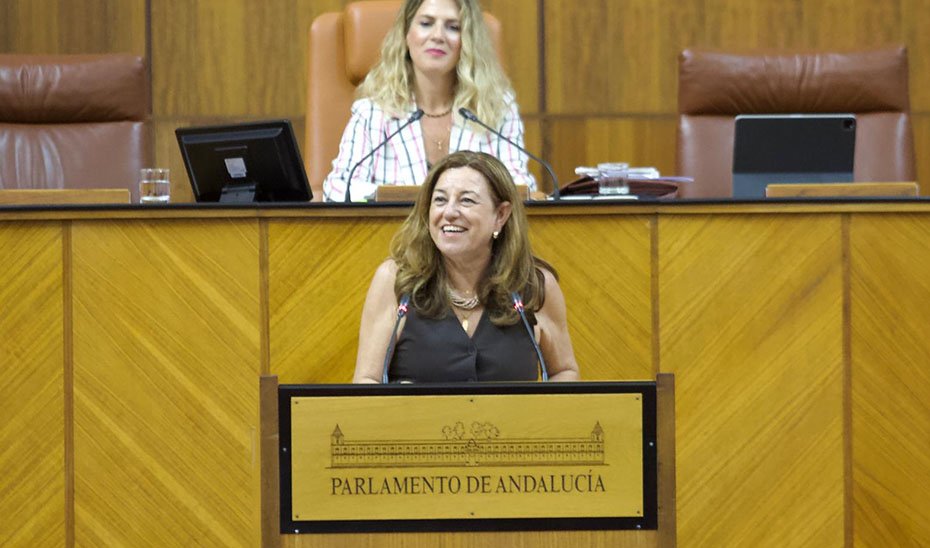
The Minister of Educational Development and Vocational Training, María del Carmen Castillo, has emphasized that the success of Vocational Training (FP) would not be possible without the collaboration of the productive sector. She has pointed out that Andalusia has consolidated «a solid» public-private network, materialized in more than 85,500 agreements with 36,500 companies throughout the community, including large groups and, notably, small and medium-sized enterprises (SMEs) that make up the backbone of the regional economy and represent over 90% of the Andalusian business fabric.
Castillo has informed the Parliament about the offering of these courses for the upcoming academic year 2025/26, which consolidates the full dualization of Andalusian FP and aims to train the new generations in professions with high demand and future projection, connecting education directly with the reality of the productive environment.
In this sense, the Minister has emphasized that this strategy is «ambitious, rigorous, and deeply responsible,» with a clear focus on employability and adaptation to the needs of the Andalusian business fabric. Additionally, she has stated that for the next academic year, a «more refined, realistic, and qualitative planning» has been proposed, including 71 strategic actions, among which are 39 new training cycles and specialization courses, eight group expansions in high-demand courses, 11 level increases, replacing basic degrees with intermediate ones, and intermediate with higher ones, and 13 adjustments to the productive fabric, prioritizing competitive cycles with high job placement rates.
In total, 168,447 new entry places will be offered, of which 1,460 are newly created. This increase consolidates the effort of the Andalusian Government, which has created 47,552 new places in the last six years, representing a growth of nearly 40% compared to 2018.
Furthermore, there will be a total of 3,773 training cycles and specialization courses in the upcoming academic year, 31% more than in 2018, with a wide range of different titles reaching 197, out of the total of 222 in the national catalog, that is, over 88%. Innovative training cycles have been incorporated in traditional and emerging sectors, paying special attention to the rural area.
Likewise, María del Carmen Castillo has stated that FP is experiencing a decisive moment, as in recent years, firm efforts have been made to respond to the sustained growth in demand. Currently, 82% of those who apply for a place in public FP are admitted, representing a 17-point increase in coverage compared to 2018, a «substantial leap» as a result of a determined commitment by the Andalusian Government to professionalizing and quality education.
During her speech, the Minister also indicated that more and more families trust Andalusian FP as an effective pathway to employment, supported by employment insertion data. Almost half of FP graduates find employment within a year of completing their studies, with rates exceeding 52% in cycles like Mechanics or Electronics, and reaching 54% in higher degrees. Additionally, a recent study by the Institute of Statistics and Cartography of Andalusia reveals that the 2019-2020 cohort achieved a 65.7% employment insertion rate four years after completing their studies, a 26.7 percentage point increase compared to the rate recorded by the same cohort just three years earlier, in 2021.
On the other hand, the Minister has assured that the new FP model with the dualization of education has been successfully implemented in Andalusia and complies with state regulations. In fact, the Minister of Educational Development and Vocational Training has highlighted that not only has it been ensured that all Dual students in general mode in publicly funded centers on internships are registered with Social Security, but this cost is fully covered by the Ministry, exempting Andalusian companies from any kind of tax. Moreover, administrative processes have been streamlined, freeing centers from bureaucratic burdens «so that their energy can focus on training excellence.»