Aumento del 2% de plazas en universidades públicas andaluzas
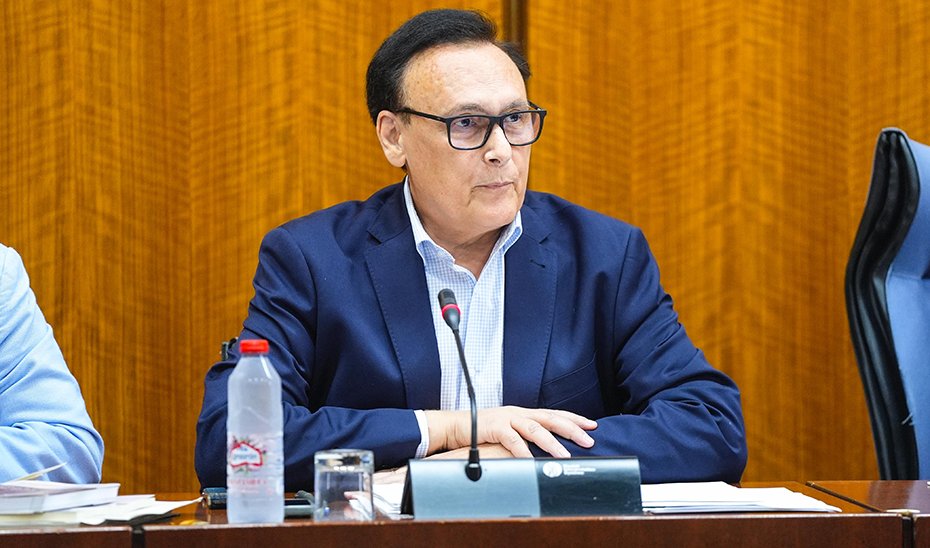
Andalucía will offer in the next academic year 2025-2026 in Andalusian public universities a 2% increase in new enrollment spots in 533 undergraduate programs, reaching a total of 51,292, compared to the 50,352 offered in the previous academic year, thanks to the implementation of the new university program. This was highlighted by the Minister of University, Research, and Innovation, José Carlos Gómez Villamandos, during his appearance in a parliamentary committee, where he emphasized that the specific decision to increase spots, whether through new programs or expansions, belongs to the universities themselves, within the framework of their autonomy and based on their internal planning, availability of teaching staff, management resources.
Thus, looking at the distribution by academic institutions, the University of Almería (UAL) will have 3,122 new students for 40 programs; the University of Cádiz (UCA) will enroll 4,839 students in 65 programs, and the University of Córdoba (UCO) will offer 49 programs for 4,108 students. The University of Granada (UGR) will have a total of 80 programs with a capacity for 11,140 students, the University of Huelva (UHU) will offer 40 programs for 2,825 individuals, the University of Jaén (UJA) will provide 3,319 new students with 49 programs, and the University of Málaga (UMA) will offer 77 programs for 7,455 students. At Pablo de Olavide University (Seville), the figures consist of 40 programs and 2,876 new enrollment spots, and at the University of Seville (US) there will be 93 programs enrolling 11,608 students.
Thus, Gómez Villamandos has emphasized that, for the next academic year, both the number of programs and the spots offered will increase compared to the previous year thanks to the implementation of new programs in the university curriculum. In this sense, he has highlighted that one of the objectives of this term in the Ministry of University, Research, and Innovation has been to articulate all the necessary mechanisms, at a regulatory and management level, to adjust the public university offering to the evolution of the real student demand and the needs of the social and productive fabric.
Therefore, the minister has highlighted the commitment to the new university program 2025-2028 agreed upon with public universities, which «updates a curriculum map frozen for 14 years,» taking into account criteria of modernization, territorial cohesion, sustainability, or internationalization. Public universities will be able to implement 188 new programs in the coming years, many of them in emerging fields such as artificial intelligence, data science, cybersecurity, health, sustainability, or energy.
In fact, for the academic year 2025/2026, «54 new programs are completing their verification process by the Andalusian Agency for Scientific and University Quality (ACCUA) for their effective implementation,» the University Minister pointed out. In this regard, he has highlighted how the Ministry has facilitated all administrative procedures for these programs to be developed quickly, also supporting universities in processing new proposals and modifying verification reports, which also allows for the expansion of spots in existing programs.
Finally, Gómez Villamandos has emphasized that the effects of this new university program «are not immediate, and it will be at the end of its horizon, in 2028 or even earlier, when we will begin to clearly see the results, as the newly authorized programs are progressively incorporated, their effective implementation is verified, and the student response and its impact on the productive fabric are consolidated.» «This transition period is necessary to observe how the academic offering adjusts to the real demand, and thus assess rigorously the positive impact that this planning is having on the Andalusian university system,» he concluded.